
The 13-Layer Quality Engine
Every conversion passes through 13 layers of deterministic and AI-driven validation. 90%+ of artifacts clear validation, with per-line provenance on every output.
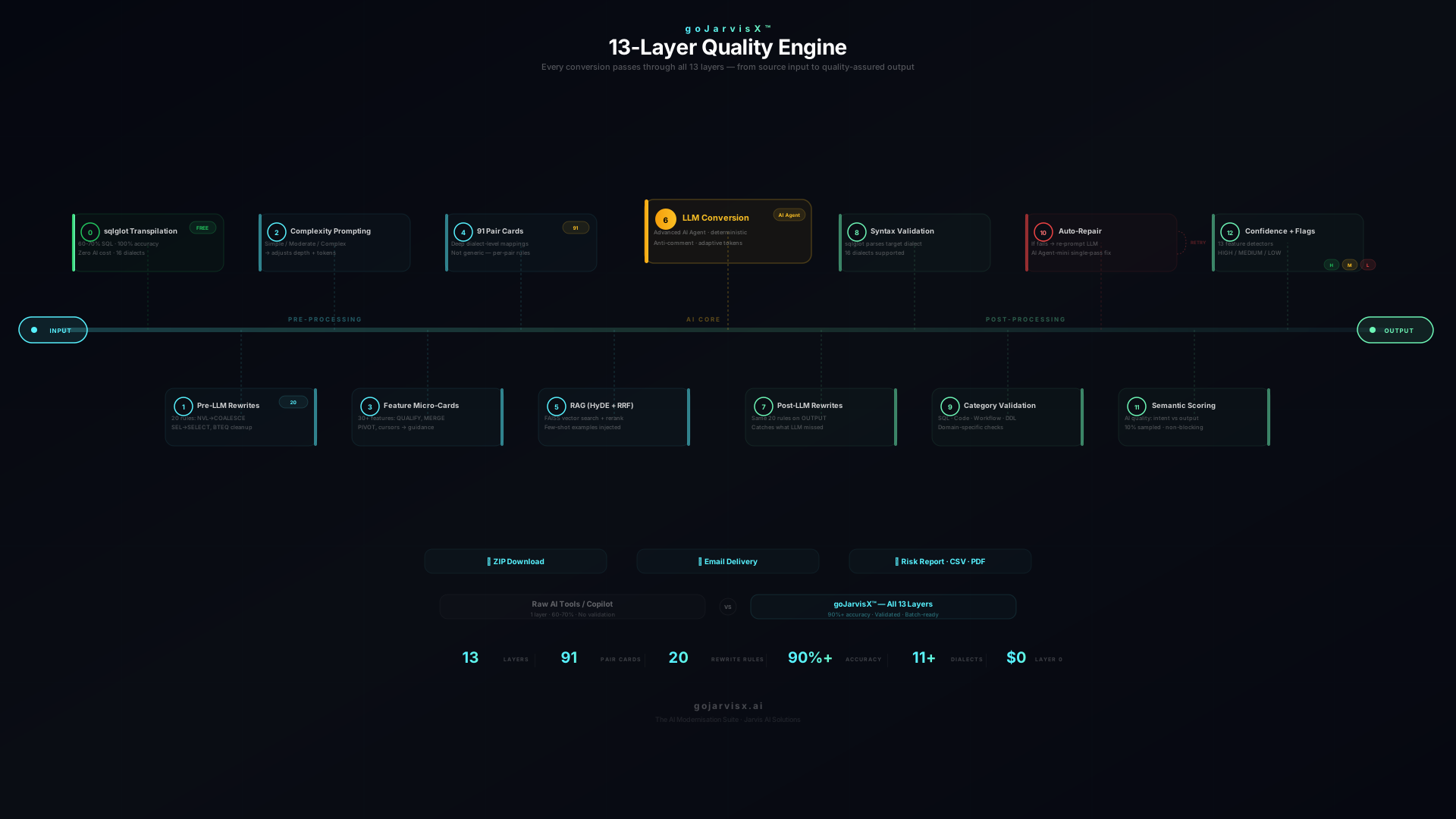
Per-file dialect detection
Each artifact is scanned to detect its source dialect before conversion.
Chunking
Large artifacts are split into context-safe chunks that preserve statement boundaries.
LLM conversion
Complexity-adaptive prompting drives the Claude Sonnet batch conversion.
Sanitization
Fence stripping, comment cleanup and output normalization.
Deterministic rewrites
INTERVAL fixes, type mapping and dialect-specific transforms applied in code.
Schema engine
DDL type fixes and clause cleanup for schema artifacts.
sqlglot transpilation
AST-level transpilation cross-checks the LLM output against a parser.
Syntax validation
SQL parse and Python AST checks catch malformed output early.
Compile-friendly validation
Output is validated to be compile/parse-clean on the target engine.
Auto-repair & reconversion
A capped Claude Haiku repair pass plus synchronous re-conversion fix failed, empty or placeholder outputs automatically.
Live execution validation (DuckDB)
The converted SQL is actually run against generated sample data in an in-process engine, and its result rows are diffed against the source — proving correctness, not just syntax. On failure it self-repairs with the runtime error as a hint and re-validates. Credential-free; covers all 44 source→target SQL pairs.
Semantic scoring
LLM-based semantic scoring on a sampled subset measures meaning preservation.
Blended quality score
70% deterministic + 30% semantic produces the final confidence score.
See Layer 11 with your own eyes
Build a schema, generate sample data, and run your source vs. converted query live — watch the rows match (or not) in real time. No credentials, no setup.
Open the Live SQL Validator